


Stroke
What is a stroke?
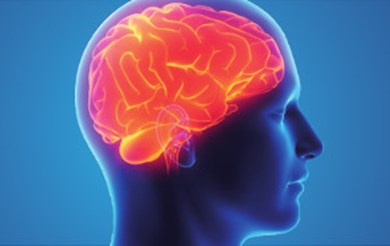
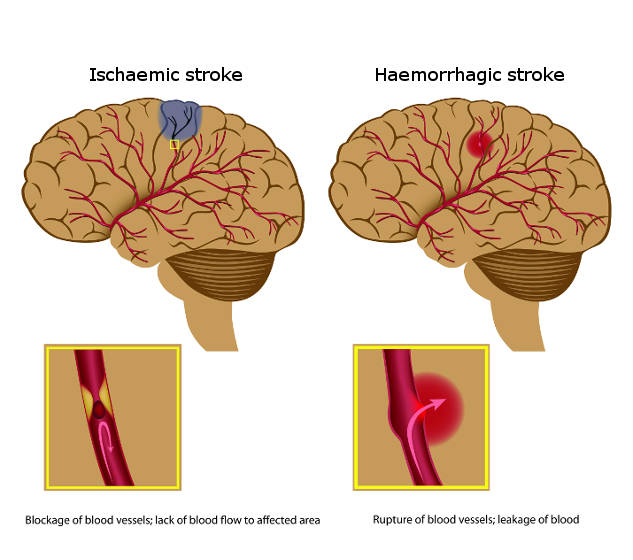
A stroke is an emergency condition in which there is a disruption of blood supply to part of the brain, leading to brain injury.
What are the different types of stroke?
There are two types of stroke:
- Ischemic stroke: A blood clot in a blood vessel causes a blockage of blood flow
- Haemorrhagic stroke: A weakened blood vessel bursts, causing blood to leak into the brain. Also see section Brain haemorrhage.

What are the symptoms of a stroke?
The occurrence of stroke can usually be identified by the onset of the following symptoms:
- F - face. Part of the person's face starts to droop, making it difficult for them to smile.
- A - arms. The person is unable to fully lift their arms.
- S - speech. The person has difficulties with speech, which becomes slurred.
- T - time. It is time to call 999. A person displaying these symptoms must immediately be taken to an emergency department for treatment.
A person experiencing a stroke might also have a sudden headache, confusion, dizziness, problems with communicating or problems with their vision.
How does a stroke lead to brain injury?
The brain relies on a rich supply of oxygen to keep brain cells working; this is supplied by an intricate network of blood vessels that pump oxygen-rich blood around the brain. When this blood flow is disrupted by either a blood clot or a burst blood vessel, the brain cells are starved of oxygen and they begin to die. This results in brain injury.
What is a transient ischaemic attach (TIA)?
These are mini strokes that can occur in the brain. A TIA occurs when there is a temporary disruption to the blood supply to the brain due to a blocked blood vessel. The symptoms of a TIA are the same as a stroke, but they only last for a few minutes or hours. However, medical attention should always be sought as soon as these symptoms are recognised, as they can be an indication of a stroke occurring. Even if the symptoms of a TIA improve or disappear by the time an ambulance arrives, it may still be necessary to carry out a medical assessment, as TIAs indicate a risk of experiencing a stroke in the future.
My story
Nigel and Paula's story
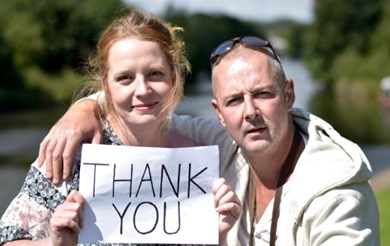
Nigel and Paula share their experiences of how life changed instantly after Nigel had two strokes – the first as he was waiting for a bus - and how Headway is helping them to rebuild their lives.
Read storyBrain aneurysm
A brain or cerebral aneurysm occurs when the wall of an artery or blood vessel in the brain is weakened, causing it to swell into a blister-like shape
Find out moreBrain haemorrhage
A brain haemorrhage is bleeding in or around the brain either as a result of ruptured aneurysm, known as a haemorrhagic stroke, or following a significant blow to the head.
Find out moreWhat are the causes of stroke?
Sometimes the disruption to the blood supply to the brain can be due to natural causes, such as weakening of blood vessels over time or a genetic condition that increases the risk of experiencing a stroke.
However, there are some factors that can increase the risk of experiencing a stroke; these include:
- Smoking
- Drinking too much alcohol
- Being overweight
- Not exercising enough
- Eating too much food
There are some blood-related medical conditions that also increase the risk of having a stroke. These include:
- Diabetes
- High blood pressure
- Atrial fibrillation
- High cholestrol
Receiving appropriate treatment for any medical condition can reduce the chance of experiencing a stroke.
How is a stroke diagnosed?
Upon arrival at a hospital, a person suspected of experiencing a stroke will usually undergo a number of tests to confirm the diagnosis. Tests can include:
- Brain scans - these can help with confirming diagnosis of the type of stroke that has occurred and also whereabouts in the brain it has taken place. This can help with guiding treatment at the next stage. The most common types of brain scans used are computerised tomography (CT) and magnetic resonance imaging (MRI) scans.
- Blood tests - these are carried out to get more detail about the person's blood, such as blood pressure and blood sugar levels, which can help with confirming a diagnosis of stroke and identifying the cause.
- Heart tests - these tests take images of the heart and blood vessels to identify the cause of the stroke. The most common types of tests used are echocardiograms and ultrasound scans.
- Swallowing tests - a person experiencing a stroke usually has problems with speech and swallowing. A test that assesses how much a person is able to swallow can help to confirm a diagnosis of stroke.
- Other assessments - a stroke can lead to a number of different issues, such as problems with mobility and cognitive (thinking) problems. A range of other assessments can be used to identify what particular issues the person is having, which can help with treatment at the next stage.
How is a stroke treated?
Strokes are treated differently depending on whether they are ischemic or haemorrhagic.
Ischemic strokes are often treated with medication. Various medications can be used to reduce the chance of blood clots forming to prevent future blockage of the brain's blood flow. Other medications can be offered to reduce high blood pressure or the amount of cholesterol in the person's blood. Alternatively, a surgical procedure known as carotid endarterectomy can be performed to remove blockage in a blood vessel.
Haemorrhagic strokes can be treated with medication as well; medication can also be used to prevent the occurrence of future blood vessel bursts. A surgical procedure known as a craniotomy might be performed to remove leaked blood from the brain and repair any blood vessels that have already burst.
What are the effects of a stroke?
A stroke can lead to a number of longer term effects such as problems with speech, swallowing (dysphagia) and one-sided weakness (hemiparesis) or paralysis (hemiplegia). For more information, see Effects of brain injury.
Get support from Headway
Headway offers a range of support to people with a brain injury, their family and friends. From a network of local groups and branches to specialist nurses, grants to individuals in need and nurse-led helpline
Explore the Supporting you section to find out how we can help.