

Senior leaders
Luke Griggs (Chief Executive)
0115 924 0800 Mobile: 0791 266 8551
Rosheen Hodgkiss Bernard (Head of HR)
0115 695 0357
Rachel Hodson (Director of Fundraising)
07435 180 735
Colin Morris (Director of Communications)
0115 947 1902
Ruth Ormston (Director of Finance and Administration)
0115 855 0470
Ruth Owens (Director of Services)
07887 454 289
Our trustees
Jane Allberry
Jane Allberry retired in 2017 from her role as a Deputy Director at the Department of Health, where she enjoyed a long and varied career. Her work covered a broad range of health and social care policy areas, with particular interest in services for people with long-term and complex needs.
She has a particular interest in health policy affecting individuals living with neurological conditions — an area that has professional and personal relevance.
In 2013, Jane’s son Henry sustained a serious brain injury following a violent assault. This life-changing event deepened Jane’s understanding of the challenges faced by brain injury survivors and their families, and strengthened her commitment to improving care, support, and public awareness around brain injury.
Jane brings to the board not only a wealth of strategic and policy expertise, but also the insight and perspective of someone directly affected by the long-term impact of brain injury.
Rob Callan (Treasurer)
Rob is a qualified chartered accountant and has held a number of senior financial positions across a wide range of sectors. Most recently, Rob was Chief Financial Officer and Interim Chief Executive Officer of Chaucer Group, a global insurance company headquartered in London. Rob retired from executive roles in September 2024 and joined the Headway Board of Trustees as Treasurer in June 2024.
Alexa Charnley
Alexa joined Headway-the brain injury association as a trustee in October 2023. Alexa is the Fundraising and Communications Director of the Mental Health Foundation. Alexa has worked in fundraising and marketing roles within the charity sector for 17 years and has previously worked for Save the Children UK and Cancer Research UK.
Alexa is the carer of a family member who has an acquired brain injury and has joined Headway with the aim of utilising her charity fundraising experience to support Headway’s mission of improving life after brain injury.
Outside of work, Alexa is Chair of Governors of a North London Primary School and spends the rest of her time with her family, and enjoys reading, and taking her dog for walks in the woods.
Dr Will Curvis BSc (Hons), MSc, D. Clin. Psychol.
Will is a Consultant Clinical Neuropsychologist with experience supporting people who have experienced brain injury. His clinical work includes neuropsychological and mental capacity assessment, neuropsychological rehabilitation and psychological therapy adapted to cognitive difficulties.
He has worked across major trauma, stroke, neurosurgery and specialist neurorehabilitation services, providing direct clinical intervention alongside consultation, training and supervision to multidisciplinary teams.
Will is also a Clinical Tutor on the Doctorate in Clinical Psychology at Lancaster University, where he leads on neuropsychology and physical health teaching, overseeing clinical placements, supervising research and contributing to trainee selection and assessment. He has worked as an Associate Trainer for Headway, developing and delivering training for professionals and other stakeholders on brain injury and neuropsychology.
Will’s voluntary experience includes serving as a trustee of After Matters, a charity supporting young people who have sustained traumatic brain injury, alongside establishing and leading a volunteer wellbeing service within Festival Medical Services.
Emma Di Iorio
Emma is a practising solicitor and CEO and co-founder of Spriggun, an advisory firm working at the intersection of AI, data and cyber governance.
Emma previously led the global privacy, AI and cyber function at a global consumer goods company, growing the team from four to twenty-four people, and was AI legal and privacy regulatory lead at a US technology company. She brings expertise in cyber security, digital transformation, and charity and company law.
Over a decade ago, Emma sustained a traumatic brain injury in a mountain biking accident abroad. That experience gave her a first-hand understanding of the impact of brain injury on survivors, and is why Headway's helpline, information and local network matters to her.
Mario Ganau, MD PhD MBA LLM FEBNS FRCS(Ed) FFSTEd FACS
Mario is a Consultant Neurosurgeon at Oxford University Hospitals and, since 2023, has also been appointed by NHS England as Clinical Lead for the Neurosurgery Transformation Program for the South-East Region.
Mario is an international expert in the holistic management of traumatic brain injury patients and remains committed to advancing the care and wellbeing of acquired brain injury survivors. His contributions to this field are underscored by multiple patients and public engagement initiatives at UK and European level and has been recognised through his membership of the Neurotrauma Committee of the World Federation of Neurosurgical Societies. In recognition of his achievements as a surgeon-scientist, Mario has been elected fellow of the Sigma Xi Scientific Research Honour Society.
Adrian Hawley
Adrian joined the committee of Headway Huddersfield & District in 2017 and with the support of the committee, Adrian has guided the branch forward. He has improved their digital offering, including development of the website and growth of their social media presence. Adrian became Chairman of Huddersfield & District in 2018.
He became a Special Constable with the South Yorkshire Police back in 1992 and for over 13 years, he assisted various specialist departments including the vice and drugs teams, the community policing team and the volunteer Police Cadets.
More recently Adrian’s legal costs career has continued to support the more vulnerable. Working in legal costs since 2001, Adrian now concentrates on helping to maximise the recovery of costs in serious injury and Court of Protection claims.
Georgina Howie
Georgina suffered a stroke in 2024, caused by a rare side effect of a cancer drug. This led her to Herefordshire Headway, which she describes as life changing. Embracing all that was offered, she has devoted her thoughts and time to promote Headway throughout the county and beyond.
In her early career, Georgina was a tutor at a Bank Training Centre, teaching banking practice. Two sons later, it was not practical to return, so she turned to the NHS, initially in GP practice, then in the wheelchair service, finally working directly for the Managers of Herefordshire Primary Care Trust.
Throughout her working life and into retirement, she served on various charity committees, pausing to be her husband’s full-time carer as his health deteriorated.
Craig Keady
Craig has over 15 years’ experience in safeguarding and senior leadership, including as a Senior Consultant with the NSPCC and in senior education roles. He now runs his own safeguarding consultancy, supporting organisations across the UK and internationally with training, independent reviews and advice on safeguarding, risk and governance. He has also served as a school governor and multi-academy trust trustee.
Craig’s connection to brain injury is personal. When he was 15, his mum suffered a brain aneurysm and stroke, followed by two further brain haemorrhages in later years. His family’s experience showed him how profoundly brain injury can affect everyday life and the importance of advice, understanding and support. He brings this perspective alongside his professional experience to help Headway UK support people affected by brain injury and their families.
Dr Michael Leavitt PT, DPT, CCI, FHEA, MCSP
Michael is a physiotherapist with over 16 years' experience spanning the full spectrum of neurorehabilitation.
For more than a decade at Northwestern Medicine's Neurologic Rehabilitation Center, he treated patients living with severe traumatic brain injury, stroke, concussion and neurodegenerative disease, work that shaped his understanding of what recovery really demands, for patients and families alike.
Since 2021, he has led an active head injury research programme at Edinburgh Napier University, focused on youth concussion and sub-concussive impact, and since October 2025 has consulted for HIT Recognition, translating wearable sensor technology into concussion protocols designed to reduce long-term neurologic disease. Michael also serves as the ENU Physiotherapy Programme Leader.
This blend of frontline clinical experience and specialist research gives Michael a rare, dual vantage point: the acute realities facing Headway's beneficiaries, and the emerging science shaping long-term brain injury outcomes.
Belinda Moore (Chair)
Belinda has extensive experience across a wide spectrum of marketing disciplines gained from a career of over 30 years in the UK and overseas. She has held senior marketing and communication roles in health and social care, with her most recent executive role as Chief Marketing Officer for E.ON Energy.
Belinda holds non-executive roles at Tipton & Coseley Building Society, LGPS Central and Benenden Health.
In 2023, Belinda's husband had a serious road traffic accident resulting in severe physical injuries including a traumatic brain injury. That experience introduced Belinda to Headway and gave her an understanding of the impact of TBI on survivors and their families.
Steve Windsor
Steve was a trustee of Headway West Sussex just over 10 years ago where he saw the great work being done first-hand with service users.
Steve recently retired, with his last corporate role as a Chief People Officer. He has many years of experience not just in HR but in operational/transformational roles – ranging from manufacturing through to life sciences work. He has operated at board level leading on remuneration committees and developed remuneration models as well as talent management and leadership coaching.
Steve is also a blood bike volunteer and keen motorbike enthusiast.
Headway UK Ambassadors
We are delighted to have the support of our incredible ambassadors, who are passionate about doing all they can to help raise awareness of brain injury. Our ambassadors help by sharing their lived experience of brain injury, joining fundraising events, and helping spread the word about our work.
James Cracknell OBE (British athlete and Headway UK Vice President)

On 20 July 2010, double Olympic gold medallist James Cracknell sustained a severe traumatic brain injury while cycling through Arizona.
He was attempting to cycle, run, row and swim from Los Angeles to New York in just 16 days when the wing mirror of a petrol tanker travelling at 65mph struck the back of James's head.
Directly a year on after his accident, James Cracknell worked with Headway UK to create the video appeal 'Use your head. Use your helmet' to raise awareness of cycling helmets after his one, saved his life.
Lance Corporal Johnson Beharry VC (British Army soldier and Headway UK Special Ambassador)

On 18 March 2005, Lance Corporal Johnson Beharry was awarded the Victoria Cross - the highest military decoration for valour in the British and Commonwealth armed forces.
While serving with the 1st Battalion of the Princess of Wales's Royal Regiment in Iraq, Johnson twice saved members of his unit from ambushes, sustaining a serious brain injury in the latter engagement. Today, Johnson still suffers from the residual effects of his brain injury, including poor memory.
Johnson Beharry is a Special Ambassador for Headway UK - the brain injury association. Johnson said:
"The world is full of heroes who don't get any recognition, people who everyday face challenges in their lives - who learn to live again following brain injury or who care for loved ones who are injured."
In his role as Special Ambassador for Headway UK, Johnson has helped raise awareness of the effects of brain injury through numerous media interviews in which he has shared his personal testimony of how his own brain injury has affected his life and the lives of his loved ones.
Alan Smith (Former English football player, Sky Sports commentator and Headway UK Ambassador)

Former England and Arsenal footballer, Sky Sports commentator, has been a supporter of Headway UK since joining James Cracknell as part of a Headway UK team taking on the Prudential RideLondon event in 2013.
Since then, Alan has continued to support the charity, taking part in Hats for Headway while ensuring safety-first messages are given in his commentaries when head injuries occur.
Alex Danson-Bennett MBE (Former English international hockey player and Headway UK Ambassador)

World-renowned hockey player, Alex Danson-Bennett MBE, retired from international hockey in February 2019 after sustaining a mild traumatic brain injury whilst on holiday with her husband in Kenya.
Her well-documented injury has seen head injury protocols improved within elite sport and she is passionate about raising awareness and supporting others with similar injuries.
Alex Danson-Bennett: My Hidden Story

View video transcript Hide video transcript
This is someone I've always looked up to, she's an absolute inspiration to all of us and I couldn't imagine any better person to be my captain. You'll always know she's getting 100 percent every game in training, never won a marker because you always know you're gonna get pushed and shoved and she's gonna be bad, she's gonna swing and she's gonna hit the ball as hard she can.
Reacting with that question was one of the most memorable parts of my life, certainly my playing career. You hear the tannoy Great Britain Olympic champions and again it's almost disbelief; it's a moment that you'll cherish for the rest of your life. The toughest thing about any head injury is there is no timeline.
Alex Danson is one of the most decorated hockey players in the world, but in 2018 her life took an unexpected twist after a freak accident which left her with a debilitating injury. I've come to meet Alex to hear her story. After the World Cup, everyone gets a break.
My boyfriend and I had booked a holiday to Kenya. One evening we went to a different restaurant for dinner and we were sat on some low seats. Alex was chatting away and he said something very funny. I flung myself back laughing and I cracked the back of my head flush on the concrete wall. If I'm honest I knew something wasn't right, and that night I woke up every hour. It's actually the fourth head injury I've had and I knew that was something I had experienced before, and my heart sank. I thought, "Oh please, not again." We just didn't know what was going to happen in the next few weeks.
So we came home, and I have to say the flight from Kenya was horrendous. The flight attendants came over to check she was okay, and we sort of just passed it off as a migraine to make sure we could get on the plane and get home. I remember being at the airport, I had my head in my hands, tears were rolling down my cheeks, I was white as a sheet, and I couldn't imagine getting on the plane. It was very much get home and try and get recovered.
I went to the training facility, where we trained. Typical of an athlete, I underreported how bad I was feeling and I managed to go to the team away day. All I can really remember is I went in, I hadn't seen the girls for weeks, and I turned to talk to one of my teammates and I lost the ability—I couldn't speak. It terrified me. All I remember thinking was, "Don't make a fuss, don't make a fuss, you'll be fine." A few minutes later the session was over and I got outside as quick as I could. I remember being a bit teary but tried not to show anyone.
Suddenly, I can only explain I felt horrendous. I thought somebody had just hit a nail into my head and my headache was excruciating and I felt incredibly sick. I text our doctor and said, "I've just been sick, should I take a paracetamol and go to bed?" She called straight back and said, "You need to get in now." The next thing I know I'm getting a call from the doctor saying we're rushing to the hospital. Alex was pretty poorly when she got there so she went straight through. I had every scan under the sun, there was no bleed detected, but I was not well enough to be, so I was in the hospital for a week. It was one of those things where it just slowly got worse. It wasn't like bang, she's hit her head and she's in hospital; it was "I don't feel that great, I feel really sick, I'm going to the doctor's, I've been admitted to hospital." It's not until that point where you start thinking, "All right, this is actually quite serious now." They said it was a traumatic brain injury and it could take you several months to recover. I remember looking at the doctor and saying, "Whatever, you don't know me, I'll be better in two weeks."
One thing I probably will never forget is when we left the hospital. My other half, Alex, came and picked me up, and I remember walking into the corridor. I've never felt so unwell in my life. I felt like I just wanted to get to a wall and have everything disappear. It got really bad before I got anywhere near to being able to have a day that resembled anything like a normal life. With Alex's health and playing career thrown into turmoil, she turned to specialists for help to begin her rehabilitation.
The hardest part of this was that you don't know when you're going to get better. At the start we were told, "Yeah, two months you'll be better, three months you'll be better," but the reality was very different. When she came out of the hospital, we all thought she would be back on her feet within a few days. She was trying everything, anything that would help her to improve, and she found a lot of dead ends.
To be honest, I was fearful that I'd never get better and I just prayed, "Please let me be able to get to the bathroom," and then it was, "Please let me be able to get downstairs." A month before I'd be leading a country in a World Cup, and now I could hardly get through a day. Then Hobbs came along and showed her a whole new approach—specifically neuro-rehab with a wide multidisciplinary team, not just physiotherapists. We have occupational therapists, speech therapists, psychologists.
Alex felt quite low and I think we were struggling to see the root of recovery. I thought maybe it's not for me, and actually six months later when I improved a little bit, they contacted me again saying, "Please come see us, we can help." When Alex first came to us, she reported that 95% of her day she was suffering from a headache, so very little reprieve from those symptoms. At the start, a lot of it was unpicking what was the cause and the trigger of her symptoms and then educating her as to how to rest, reduce any overstimulation, and then gradually reintroduce these activities that would help her in the long term recover. She asked me just simply to shake my head really quickly from side to side and I honestly looked at her like, "Does she know what she's talking about?"
She would try to explain to me some of the things that she was doing on the phone and I'd be going, "Okay." To some people they might even look faintly ridiculous, but to be frank, the improvement has been incredible. Where she is today is light-years away from when she came out of the hospital. With Emma and with Hobbs, had I not gone, I don't know when I would have ever had the confidence to move quicker than a walk. I didn't even think about being able to jog or moving my head, because you're afraid. She's improving every day and she's running more and more. Emma's given her the program for it, so even just two and a half minutes every day or every week makes a big difference.
What about Alex, how has he handled this and how have you as a couple got through it? He is one of the most amazing human beings you will ever meet. He has seen me at my worst, he has cared for me at my worst, and he has said he loves me more at my worst. And they say you truly learn about a person when the chips are down. When things are wonderful it's easy, but when things get difficult you learn about a person, and he became overnight my carer. I wasn't able to liaise with doctors, I wasn't able to hold conversations on the telephone; he did everything for me. My job in that role was just to make sure that the best people that Al has access to were looking after her, and this brought us much closer together. He's been amazing. It doesn't matter how bad it gets, it doesn't matter how bad she's feeling, he doesn't falter. You just know when things happen, you know the person that you want by your side, and for me that's him. Yeah, it's been a real rock for my parents and for the rest of us. I hope nobody ever has this, but if they do, we can support one another through it because we've all learned something.
Sixteen months after Alex Danson suffered a debilitating brain injury, she returned to training at the home of GB hockey. She hasn't seen some of her teammates since the 2018 Hockey World Cup. This is significantly the quietest I've ever seen the gym. I'll never ever forget when it once was before; the whole team is in here and you couldn't finish until the last person finished. And those are the things that make a team, those are the moments that every one of our squad members remembers. This is kind of the next phase of my rehab, and it's trying to do more specific movements that will transition me back into hockey better.
Alex has had support from Emma from Hobbs Medical, and one of the things we've been working together on is actually integrating Alex back into her environment. When you get back in and see the familiarity of the place and obviously the people that you know, that, as I say, was about returning to normal activities, so it was hugely motivating. I know Alex is turning back into the brilliant athlete that she is. To be seeing her colleagues and friends, I have to say it's been such a long time since I've stepped on the field. It's probably the first time I've really imagined being back on it, and the enormous amount of joy I've had here over many, many years.
Amber was in the full England setup, and with no prompting whatsoever she said, "We really miss Al. We miss her spirit being around the team, we miss her enthusiasm, we miss her drive, we miss her leadership, and we all just want her back and we want her better." She said none of us can fully understand what she's been through, but we can only imagine because this England team for her and this great women's team for her was everything.
What do you think it's also done for your understanding of mental health issues, the invisible illness? I think people within my sphere understood, and I wanted people in the next sphere to understand, because although they can't directly help me, there will be somebody in their life who they can help, who they can understand, who they can support. I've not been well enough to reply to so much, but I've got an inbox this large; I will go back to every person and I will say thank you because in my hardest moments you cared. And that's what I hope people get from this—they will understand how to help people, because I am certainly not the only one that has something that is challenging.
There are very few good things to come out of this concussion as it were for her. You know, I feel like she's speaking directly to other professional athletes and anyone who plays sport at a high level just saying, "This does happen, we need to take it more seriously, we need to take our time with it, and we need to be more understanding of those who are suffering."
How realistic or indeed unrealistic is it to expect you to pull on a shirt again for your country and play hockey? Getting my health back to the level is kind of what I'm focused on now, and enjoying other things that I am now able to enjoy, and concentrate on getting myself back to the position where I can make that decision.
You wrote an email to your teammates before you went back to training that was incredibly honest about the things they might see in you because of the injury. Who helped you do that, or was that your decision to say, "Right, this is what you might see and don't be alarmed by it"?
What I did over a period of time is I just jotted down what I found hard. I just put it all together and I said, "As hard as I find it, I'm asking for your help," and true to form they were incredible. For the last seven months I was at a stage where I couldn't start this phase of my rehab. I'm using every bit of energy I have to stay focused and positive. Now, I am metaphorically learning to walk again for the first time in my life. As hard as I find it, I'm asking for your help: please be happy to see me, I'll be so happy to see you. If I cry, tell me I will get well; I may just need to hear it. But my headaches are bad; you may notice me putting my head in my hands, it helps relieve pressure. My rehab looks like nothing we are used to, although it's different my goal is still the same as yours: I want to improve. It's affected all I do: how I think, what I feel, and how I behave. It's the steepest mountain I've ever climbed. Sometimes I get to a ridge only to see I have to go down before I go back up. When I do reach the top, it'll be the best view I have ever seen.
Ben Price (English actor, director and Headway UK Ambassador)

When Coronation Street decided to feature a brain injury storyline, actor Ben Price - whose character Nick Tilsley was to sustain the injury - made it clear he wanted to thoroughly research what it means to live with such an injury.
Ben spent time with Headway Central Lancashire (Preston and Chorley), of which he is now Patron, meeting brain injury survivors and their families to get a better understanding. In addition to portraying brain injury with refreshing clarity and honesty on screen, Ben has also helped to raise awareness of brain injury and Headway UK in the national press through numerous interviews.
Dr Bruce Powell (Former ICU doctor, writer, podcast host, brain injury advocate and Headway UK Ambassador)

Dr Bruce Powell is a former intensive care doctor, who became a writer and brain injury advocate after a near fatal cycling accident caused a severe brain injury and major memory loss. Bruce found himself experiencing medicine from both sides of the bed: first as a doctor, then as a patient.
Bruce trained at the Royal Free Hospital in London and worked in anaesthesia and intensive care in both the UK and Australia, including service with the Royal Navy. He later became Medical Director of organ donation in Western Australia, helping expand donation services across the state.
Since his injury, Bruce has written and spoken openly about the uncertainty of brain injury, rehabilitation and the difficult process of rebuilding a life when memory, identity and confidence no longer feel reliable.
He is involved in research and advocacy work with Monash University, Melbourne and collaborates with a range of organisations and groups across Australia and the UK focused on brain injury, rehabilitation, disability and community support.
His work focuses on the gap between how recovery is often described and how it actually feels to live with. In his writing, podcasts, speaking and media appearances, Bruce invites honest conversations about the complexity of life after brain injury: not just survival, but the long process of rediscovering yourself.
Eric Knowles (Antique expert, television personality and Headway UK Ambassador)

TV antiques expert Eric has been supporting Headway UK for almost two decades, helping to raise the profile of the charity.
Eric regularly volunteers his expertise to act as the charity's guest auctioneer at the Headway Annual Awards, using his wit and charm to generate invaluable funds to support the charity's work.
Jack Rutter (English professional football player and Headway UK Ambassador)

Promising footballer Jack Rutter sustained a severe traumatic brain injury in an unprovoked assault while out with friends. He was just 18 at the time and was on the verge of signing his first professional contract, but his dreams of becoming a professional footballer were shattered.
With the help of Headway UK, Jack began to rebuild his confidence and was introduced to disability football and in 2016 Jack captained the Paralympics GB seven-a-side football team in the Paralympic Games in Rio.
Jack is a passionate supporter of Headway UK, in this fascinating interview from the Headway Annual Awards, Jack talks about his journey of recovery, from a serious brain injury to the heights of captaining the GB Cerebral Palsy football team at the Rio Olympics.
He also discusses the support he received from Headway Nottingham to cope with the ongoing effects of his brain injury, including balance and hearing problems.
Brain injury paralympian: My road to Rio

View video transcript Hide video transcript
In this fascinating interview from the Headway Awards in December 2016, Jack Rutter talks about his journey of recovery, from a serious brain injury to the heights of captaining the GB Cerebral Palsy football team at the Rio Olympics.
Jack Rutter sustained his brain injury at the age of 18 in an unprovoked assault while out with friends, and one punch to the back of his head led to weeks in hospital and rehabilitation. At the time of the injury, Jack had just signed a contract with Birmingham City Football Club, but eventually realised he wouldn't be able to continue playing.
Seven years on, Jack discusses the support he received from Headway Nottingham to cope with the ongoing effects of his brain injury, including balance and hearing problems. He also talks about his return to football, proudly leading the GB CP team and putting in a captain's performance in the Rio Olympics.
Marc Almond (British singer-songwriter, musician and Headway UK Ambassador)

In 2004, legendary pop music maestro Marc Almond had a motorcycle accident that left him with multiple fractures and a brain injury. He was in a coma for two weeks and spent the next two years relearning lost skills, including singing.
To show his support to others who have experienced brain injury and to help Headway UK support those affected, Marc chose to donate to Headway UK £1 from every ticket sold on his 2015 The Velvet Trail UK tour. The charity was also boosted by promotion in the tour programme and numerous mentions in the national media.
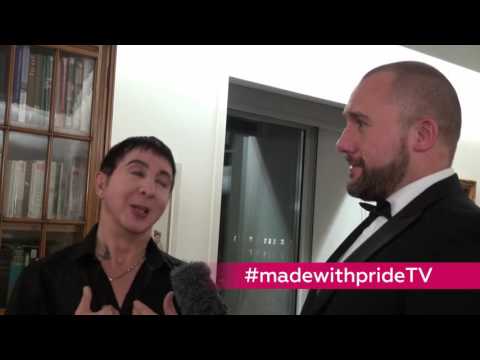
Marc was interviewed by Made with Pride TV where he discusses his support for Headway UK.
Pop legend Marc Almond 'honoured' to support Headway
View video transcript Hide video transcript
In this excellent interview from #madewithprideTV, music icon Marc Almond discusses his support for Headway, ahead of his performance at the charity's WonderLAN Ball in November 2016.
Marc sustained a brain injury in a motorcycle accident. As he regained consciousness from a 2-week coma, Marc struggled with a number of effects including memory problems and changes to his behaviour and personality. Marc had to relearn how to sing, and still struggles to remember song lyrics.
Despite this, he took to the stage at Headway's WonderLAN Ball this year, helping the charity to raise money to help improve life after brain injury and thrilling the 300-strong audience.
We'd like to send a big thank you to Marc for your amazing support!
Ryan Mason (English professional football coach, former Premier League player and Headway UK Ambassador)

While playing for Hull City in a game against Chelsea in 2017, Ryan’s career was cut short after a clash of heads left him with a brain injury. After surgery and a period of rehabilitation, Ryan was forced to retire after doctors warned him that continuing to play would put his long-term health at risk.
He is a passionate supporter of Headway UK's Concussion Aware campaign and has helped to raise awareness of this important issue through numerous media appearances.
Sam King (Ultra runner, world record holder and Headway UK Ambassador)

Sam King is an ultrarunner and fundraiser who took on an extraordinary endurance challenge for Headway UK after his mum, Penny, sustained a life-changing brain injury.
In her honour, Sam launched “Project 74” – running 74 ultramarathons in 74 consecutive days, one for every year of his mum’s life before she became ill. What began as an ambitious goal became something even bigger, with Sam ultimately completing 80 ultramarathons back-to-back and setting a Guinness World Record for the most consecutive ultramarathons run by a man.
Sam’s challenge captured widespread public attention, with coverage across various podcasts, radio and national TV, including appearances on Good Morning Britain, as well as BBC and ITV News. By sharing his journey and determination, he inspired thousands of people to follow his progress and support Headway.
Through Project 74, Sam raised more than £86,000 to support people affected by brain injury.
As a Headway UK ambassador, Sam continues to raise awareness of brain injury and champion the charity’s vital work supporting survivors and their families.
Sam Peters (Rugby journalist and Headway UK Ambassador)

Sam Peters is a journalist and writer who has been credited with driving a change in attitudes towards head impacts and concussion in sport.
Whilst writing for the Mail on Sunday and The Times, Sam took the subject of concussion in rugby from a fringe topic to front page news. This was often at personal cost as he was pointing out an uncomfortable truth for rugby authorities. This phrase gave rise to the title of his book Concussed: Sports Uncomfortable Truth, which shines a light on how sport’s ‘dirty secret’ was exposed.
Headway UK is proud to have made a small contribution to the book through an interview and quote from the Chief Executive, Luke Griggs.
Sam’s determination to bring this topic into the public eye is commendable and was essential in helping us to get to where we are today in terms of awareness and understanding of concussion in sport.
Sam has been proudly hosting the Headway Annual Awards for a number of years.