

The impact of brain injury can be devastating for both survivors and their loved ones. It leaves lives upturned, futures more uncertain, and once-familiar relationships changed. It reshapes how you fit into the world and how close you feel to the people in it.
The anxiety, fatigue, memory issues, noise sensitivity and lost confidence can make even simple interactions feel overwhelming. Technology can create more barriers than solutions. The work, hobbies and routines that once held friendships together can fall away. Even the closest of relationships can become strained.
Plans get cancelled, messages go unanswered, invitations stop coming and, slowly, isolation settles in. Often unnoticed. Often unseen. Often lonely.
But here at Headway, we see that isolation, that loneliness.
And we see you.
We see the profound struggle you face – and we’re here to help.
Our compassionate, expert support can help loosen the grip of loneliness. Whether that’s with a listening ear on our free, nurse-led helpline, or in safe, welcoming spaces across our network of regional support, new social circles can form, experiences can be shared and confidence can start to rebuild – surrounded by people who truly understand.
So, this Action for Brain Injury Week, we ask everyone – help us ensure no one faces brain injury alone.
Share. Support. Connect.
What loneliness after brain injury really looks like

View video transcript Hide video transcript
Speaker:
I don't speak [music] to a lot of my friends that I used to. I don't want anyone to live a day like I've had to live. It's the loneliest, [music] scariest place to be.
Speaker:
She didn't have anybody, so it was just [music] her and me, and I felt I needed to be there more for her.
Narrator:
Brain injury can leave you and those closest to you feeling isolated and alone.
Warren:
Hi, I'm Warren. I've suffered two brain injuries. First was when I was, I think, 29, and then [snorts] the second one was in 2012.
It's It's hard to you know, get that over, but you're just trying to get through every day. And then when you see other people, [music] you know, on certain days like Christmas and New Years or anniversaries, and you see families enjoying just normal life, and you're just like that That was all taken away.
Symra:
So, my [music] name is Symra, and I was diagnosed with a brain tumour in 2020. And it was also COVID, and my immune system was quite [music] weak, so I couldn't go out much.
I did feel a bit like people are doing things, and they are They were asking me out, [music] but it was me that was saying no.
I have to make sure that someone is available to stay with me at all times. Um so, I've sort of lost that kind of independency.
Avril:
My name's Avril. I'm a carer for my daughter, Sophie. She couldn't do anything. [music] She couldn't eat, she couldn't speak.
I had to give up all the groups that I did. We used to do such a lot. We'd [music] be going walking up mountains with the dogs, and I'd be out with friends, with exercise groups, and [music] we'd do exercises on the beach. It was just so much fun.
And then it just all [music] came to a sudden standstill, really, because she'd forget things, or she'd leave taps running, she'd leave cookers on if she ever tried to do anything for herself.
I don't know. It just [music] I couldn't go out because I knew I needed to be there for her.
Warren:
It was only my doctor, he actually found Headway. That day saved my life. You're just like welcomed with open arms. I felt no one was judging me, and that it was a safe place. For the first time, I didn't feel alone.
Yeah, I don't know what I'd do if I didn't come here.
Speaker:
Everyone [music] here is very patient, as well. And then, they do activities with you. They have little trips, as well.
Narrator:
Headway services throughout the UK provide support, new social circles, and a place to belong.
Symra:
So, if you're someone who doesn't go out much because of your condition, they're all sort of like aware of your condition, and if you tell them what to go for, they will stay with you.
Avril:
She didn't really see anybody until I suggested that we come to the Headway meetings, and that was the first time Sophie's been out of the house. [music]
And from then on, it's just been amazing how her life has changed. She shines when she comes in the room. It just makes her feel really welcome, and it like as if she belongs.
Narrator:
With brain injury symptoms like anxiety, fatigue, memory issues, noise sensitivity, and lack of confidence, even simple interactions start to feel overwhelming. Plans get cancelled, friendships fade, and isolation slowly [music] takes hold.
Brain injury can leave you feeling lonely and invisible, but at Headway, we see you. We understand.
Headway support services throughout the UK, on the phone, online, or in your community, are here for you.
Help us ensure no one faces brain injury alone.
Learn more at headway.org.uk.
Thank you.
Survey results: The impact of isolation on people with brain injury
In January 2026, we launched a survey into the levels of isolation following a brain injury to help shape the core of this campaign.
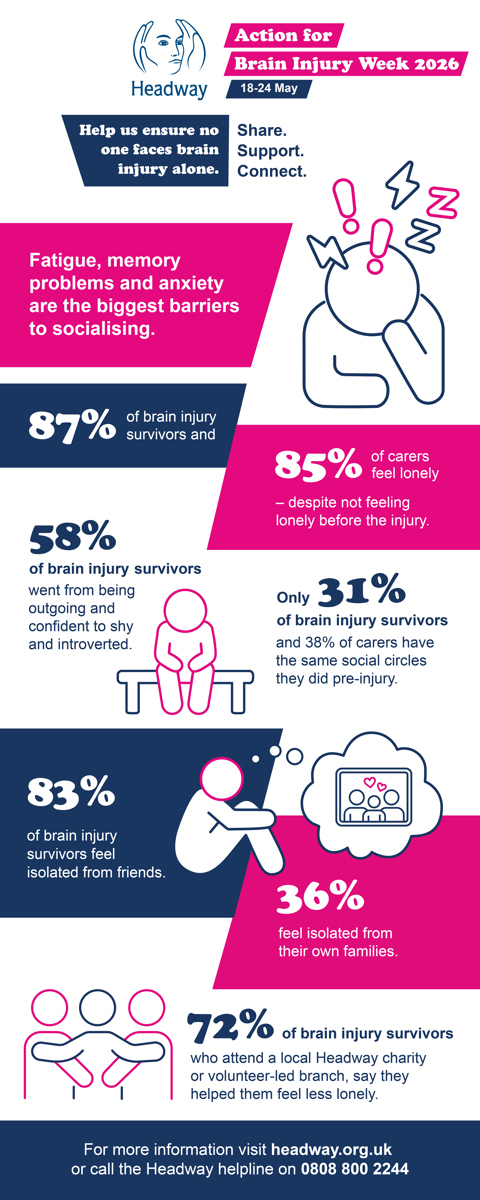
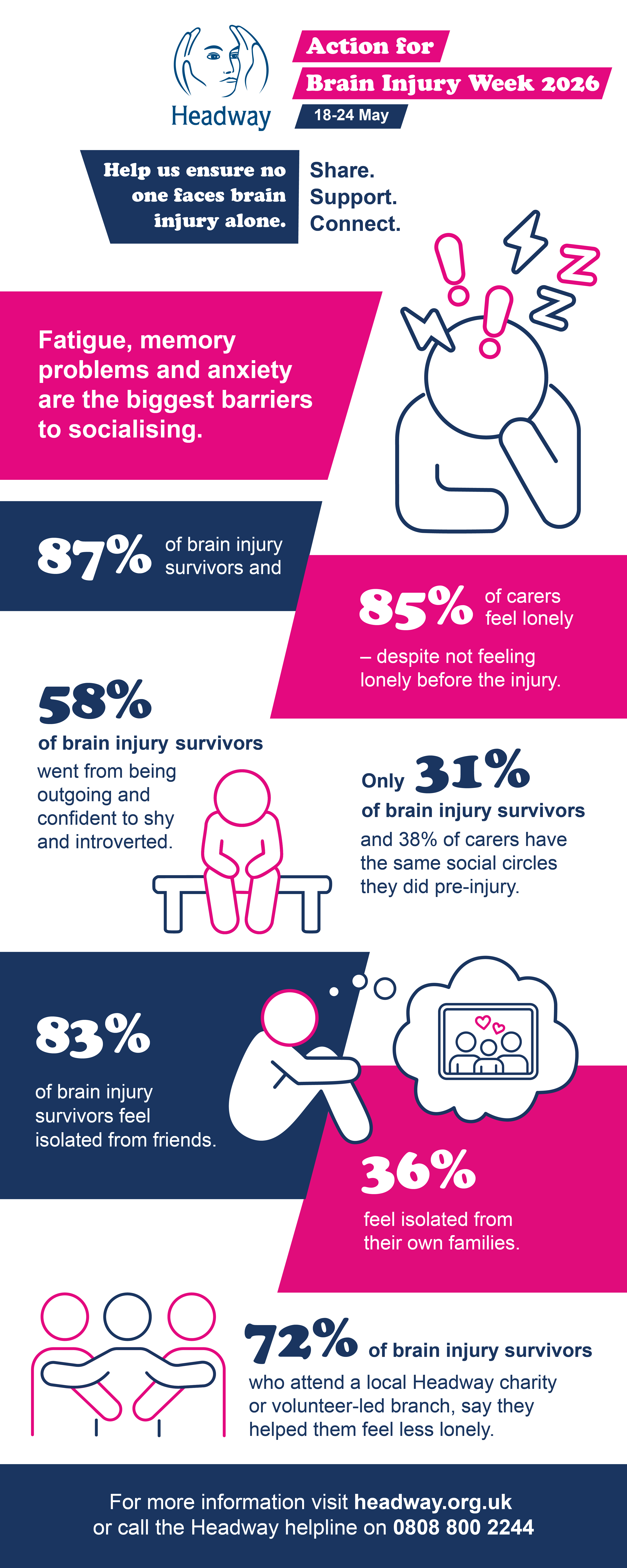
The results are striking, with 87% of brain injury survivors and 85% of carers feeling lonely - despite not feeling lonely before the injury.
Download the full report or a short-form summary to explore the results in more detail
View and share the survey results
A brain injury is a life-changing experience, often affecting the opportunities that brain injury survivors and carers have to participate and thrive in society. Common experiences after brain injury, such as being unable to return to work or struggling to cope in busy environments can often result in them becoming socially isolated. Carers of brain injury survivors are often similarly affected. A typical consequence of social isolation is loneliness.
In April 2026, Headway ran a series of surveys to better understand the experiences of social isolation among brain injury survivors and carers. We investigated how brain injury affects social life, social personality and social opportunities, as well as exploring which specific effects of brain injury cause the most interference with socialising.
We also investigated the role of technology in socialising before and since brain injury.
Furthermore, we explored the impact of attending a Headway service on wellbeing measures such as independence and confidence.
When loneliness becomes part of everyday life
“When you see families enjoying normal life on days like Christmas, New Year or anniversaries, you think to yourself ‘that was all taken away from me’."
Warren
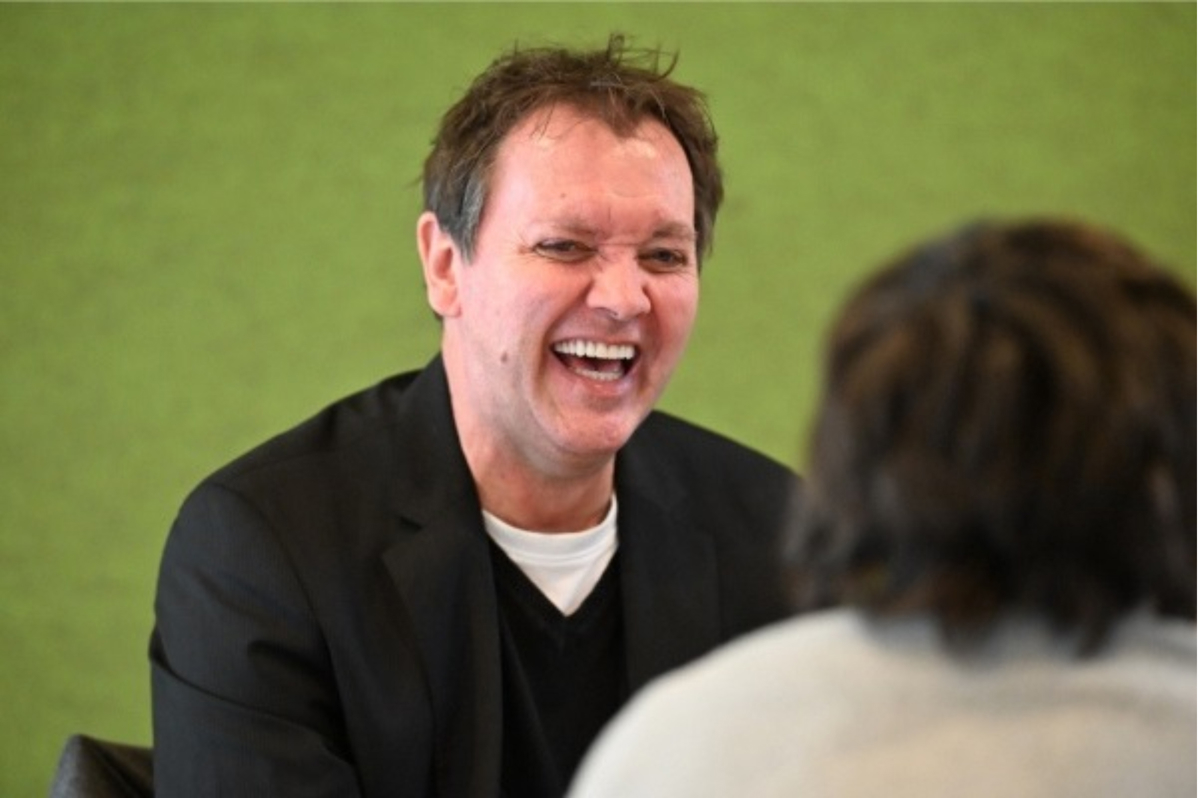
“Imagine for one moment waking up tomorrow and realising from the minute you open your eyes that no one speaks to you. Not a solitary word. No messages. No phone calls. No emails. Not a single conversation.”
This is the reality for many brain injury survivors like Warren.
The work, hobbies and routines that once held friendships together can fall away. Plans get cancelled, messages go unanswered and, slowly, isolation settles in. Often unnoticed. Often unseen.
But Headway sees you- we understand you and we are here to support you.
Warren is bravely sharing his story as part of this year’s Action for Brain Injury (ABI) Week campaign We See You, which highlights the impact isolation and loneliness have on survivors and their loves ones.
When you’re caring for someone, it can feel like no one sees you
"I had to give up all the groups that I did. I used to go walking up mountains with the dogs and be out with friends and exercise groups- it was just so much fun. And then it just all came to a sudden standstill."
Avril
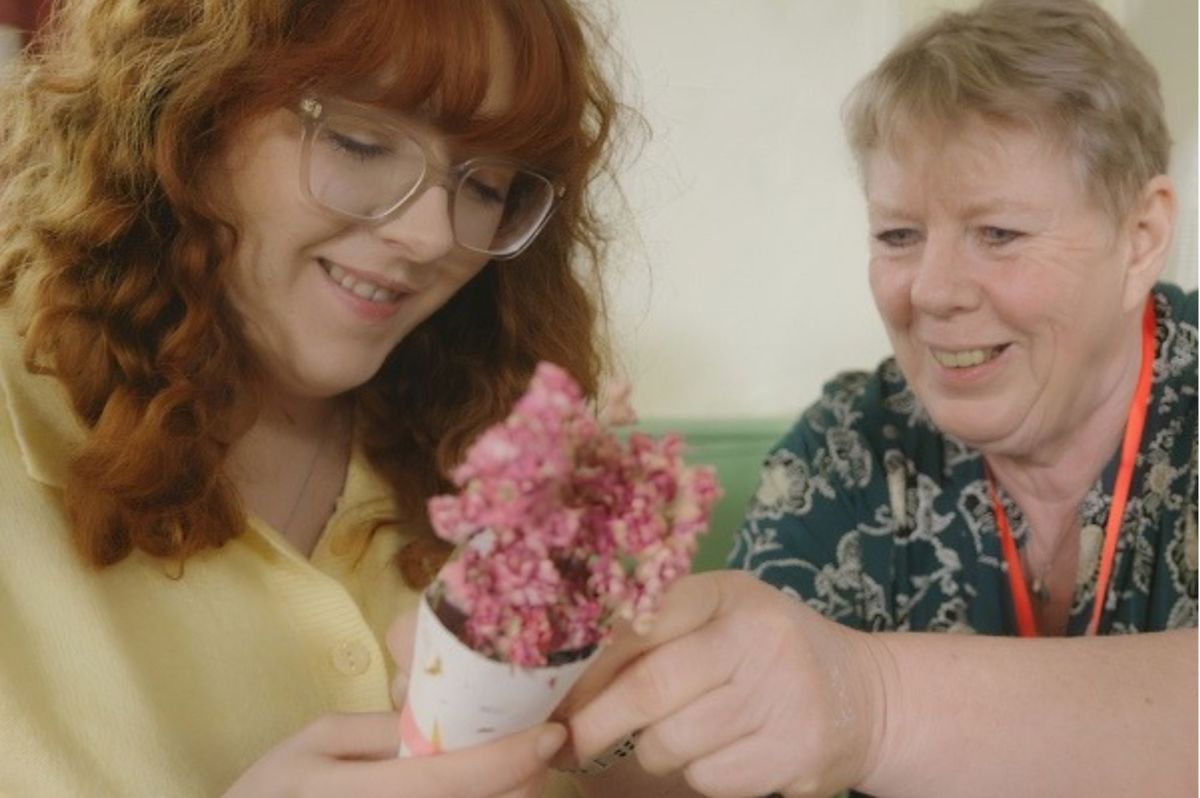
This time, we hear from a parent caring for someone with a brain injury.
Avril dropped everything to care for Sophie. But without her regular walking clubs and social groups, she began to feel isolated and alone.
With all the attention on the brain injury survivors, their carers can often get overlooked. But we see you. And we’re here to support you too.
Avril is sharing her story to highlight this year’s Action for Brain Injury (ABI) Week campaign, We See You.
When life changes, and you feel left behind
“You do feel like you’re being a bit of a burden on everyone.”
Symra
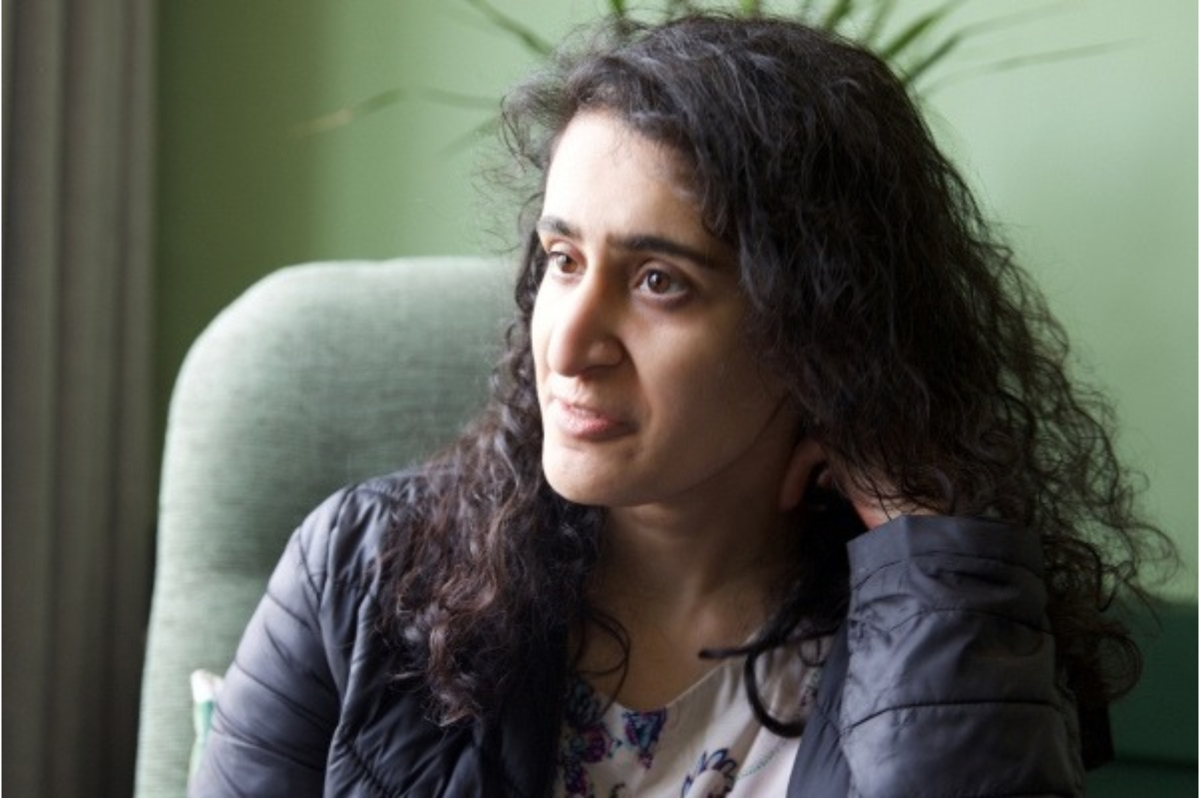
Isolation after brain injury can be devastating. Plans get cancelled, messages go unanswered, invitations stop coming and, slowly, isolation settles in. Often unnoticed. Often unseen. Often lonely.
But here at Headway, we see that isolation, that loneliness.
We see people like Symra, who is sharing her experience as part of this year’s Action for Brain Injury (ABI) Week.
Find support
We know this can feel overwhelming. You don’t have to face it alone — here’s how we can help.
From local Headway charities and volunteer led branches to our Brain Injury Identity Card, Emergency Fund, nurse-led helpline and online communities, there are many ways we can support you.
We can also help you find legal advice, care services and support near you.
Now you’ve seen it — what will you do?
By sharing this campaign, you can help more people understand what loneliness after brain injury really looks like — and why it matters.
Use the hashtags #WeSeeYou #ABIWeek to spread the word. The more people who see and share, the more we can build understanding, connection, and support for those living with brain injury.
As well as sharing this page, here are some simple ways to get involved:
Watch and share our campaign film on YouTube
Download and share our isolation survey infographic
Join the conversation on social media: Facebook, Instagram, YouTube, LinkedIn, X and BlueSky
Download the full digital toolkit and help us spread the message even further
No one should feel unseen after brain injury. You can help change that.
-

Warren's story
-

Avril's story
-

Symra's story



Find support near you
Join our online community
Connect with thousands of survivors, carers, and families across the UK. Share experiences, find peer support, and meet people who truly understand.
Find your local Headway
Tell us where you are and we will find support for you
Support our work
We need your help
Every 90 seconds, someone is admitted to a UK hospital with a brain injury. Your donation helps Headway UK provide specialist advice and support to brain injury survivors and their loved ones.
£9
could help fund a Headway Brain Injury Identity Card every month, giving brain injury survivors confidence in social situations and access to the right support.