


Survey results
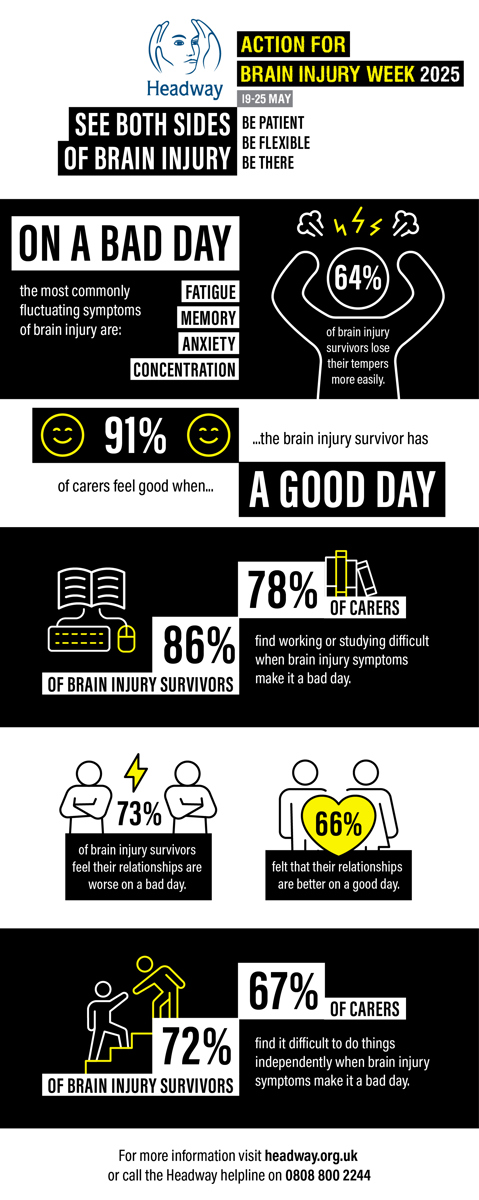
At the core of this campaign is the report sharing our latest survey results. The surveys were designed to gather experiences from brain injury survivors and their carers on the fluctuating nature of brain injury. By fluctuating, we mean that the effects of brain injury are not the same every day. They may be ‘better’ on some days and ‘worse’ on others.
Key findings:
Fatigue after brain injury
Fatigue is an extreme tiredness and lack of energy.
We all feel tired sometimes, but fatigue after brain injury is something else entirely.
Unlike everyday tiredness that fades with rest, pathological fatigue can be constant, overwhelming, and unrelenting. It doesn’t always improve with sleep or downtime, and it can make even simple daily tasks feel impossible.
This kind of fatigue is one of the most common—and most misunderstood—effects of brain injury.
Find out more
Explore the sections on fatigue across our website to learn more about:
What fatigue really is
Why it happens after brain injury
How to spot the signs
Common triggers
Practical ways to manage it
Need support?
Find out more in our publication Fatigue after brain injury (PDF).
For further information and support about living with the effects of brain injury, contact our nurse-led helpline.
Memory problems after brain injury
Memory is easily affected by brain injury because there are several structures within the brain that are involved in memory, and injury to any of these parts can impair memory performance. As remembering involves the stages of taking in information, storing it adequately and retrieving it when needed, injury to those parts of the brain responsible for these stages can lead to poor memory.
Find out more
Explore the sections on memory across our website to learn more about:
What is memory?
What is amnesia?
Strategies for coping with memory problems
Frequently asked questions about memory problems after brain injury
More information on memory problems
Need support?
Find out more in our publication Memory problems after brain injury (PDF).
For further information and support about living with the effects of brain injury, contact our nurse-led helpline.
Anxiety after brain injury
After having a brain injury, people can experience a wide range of emotions, including anxiety. Anxiety is a common consequence of brain injury, and there are many reasons why someone may feel anxious after their injury. There are a range of symptoms associated with anxiety, from mild to severe, and it can interfere with various aspects of life such as relationships, employment and emotional well-being.
Find out more
Explore the sections on anxiety to learn more about:
What is anxiety
How a brain injury can cause anxiety
Where to get professional help for anxiety after brain injury
How to cope with anxiety after brain injury
Anxiety in carers
Need support?
Find out more in our publication Anxiety after brain injury (PDF).
For further information and support about living with the effects of brain injury, contact our nurse-led helpline.
Minimising the bad days and ways to cope when they occur
Try these tips when you need some extra support on a bad day
Reach out to others on a bad day. Talk about how you are feeling, ask for practical support, and do not feel that you have to get through the day on your own. You can speak to friends, family, or others who you have a good relationship with and who understand the impact of your brain injury. Our Headway support groups, helpline and online communities are available to you as well.
Learn ways to cope with fatigue and other effects of living with brain injury.
Try to get a good night’s sleep by learning about sleep hygiene and relaxation. Our publications on fatigue and sleep problems after brain injury both contain guidance on this, as well as our webinar on sleep after brain injury, available on our YouTube channel.
Communicate with others if you are wanting to be left alone and have time to yourself. Doing this in a respectful way means that people will better understand why you may be minimising contact, helping to avoid social misunderstandings. You can consider using your Headway Brain Injury Identity Card to help with having this conversation.
Find activities that are important and meaningful for you to do and complete these on your bad days if you are feeling able to.
Enjoy nature by going for a walk, gardening, or even sitting by a window to enjoy the birdsong outside. Check out our webinar on this topic to find out more about how nature can help after brain injury.
Keep things in perspective on bad days. Life can be challenging after brain injury, but remember how far you have come and all of the things that you have achieved through your recovery.
Slow down on your bad days and allow yourself time to do things at a gentler pace.
-

Lorna's story
-

Raj's story
-

Katie's story


Keep the conversation going
Whether you're living with a brain injury, caring for someone who is, or working on the front lines—your voice matters. Share your story. Use our resources. Help others understand what life after brain injury really looks like.
Share your story. Start a conversation. Support someone on their journey.
Explore our ongoing resources and find out how you can stay involved.
1. Share Your Story
We’d love you to share your own On a Good Day stories on social media, tagging @HeadwayUK and #OnAGoodDay — whether through writing, video, or audio. Adding your voice could help others feel less alone and provide real-life insights into the fluctuating nature of brain injury. Let’s build a community of shared experiences together.
2. Take action
You can support the On a good day campaign by:
Writing to your MP about brain injury support.
Sharing the campaign materials on social media.
Hosting an event in your community.
3. Connect with Headway
If you’ve had a good day – or a bad one – we’re here
Every day with a brain injury is different. That’s why Headway is here—not just on the good days, but especially on the hard ones.
We’re the UK-wide charity dedicated to improving life after brain injury, offering support that helps people move forward, one day at a time:
Find the right support for you
You can find a wide range of local brain injury support and services in your area
For further information and support on how to support someone with a brain injury, contact our nurse-led helpline: 0808 800 2244 or email helpline@headway.org.uk
Headway Brain Injury Identity Card helps you explain your condition in everyday situations and when interacting with the criminal justice system
Headway Emergency Fund provides financial help when it’s needed most
Our award-winning website is packed with publications, guides, and resources to help you understand and manage brain injury
From coping strategies to legal advice, our publications are designed to support survivors, carers, and professionals alike
Find trusted residential homes, rehab units, and respite services tailored to brain injury needs in our specialist directory.
On a Good Day podcast
On a Good Day is the podcast about brain injury and its impact on all involved, hosted by Elizabeth Callaghan and Julia Ajayi. We'd like to thank Elizabeth and Julia for sharing the 'On a good day name', and encourage you to have a listen!

Find support near you
Join our online community
Connect with thousands of survivors, carers, and families across the UK. Share experiences, find peer support, and meet people who truly understand.
Find your local Headway
Tell us where you are and we will find support for you
Explore more campaigns
-

A life re-written
-

Every 90 seconds
-

We see you


Support our work
We need your help
Every 90 seconds, someone is admitted to a UK hospital with a brain injury. Your donation helps Headway UK provide specialist advice and support to brain injury survivors and their loved ones.
£9
could help fund a Headway Brain Injury Identity Card every month, giving brain injury survivors confidence in social situations and access to the right support.